West Virginia Phonics Lessons PDF: A Comprehensive Guide
These valuable phonics lessons, originally from the West Virginia Department of Education, are now preserved and accessible through the South East Education Cooperative’s website.
This resource offers educators a collection of materials designed to bolster reading instruction, particularly focusing on specific phonetic elements and skills.
Downloading and utilizing these PDF lessons provides a readily available tool for supporting students’ phonics development and overall literacy journey.
Understanding the Source: South East Education Cooperative

The South East Education Cooperative (SEEC) plays a crucial role in maintaining access to the West Virginia Phonics Lessons PDF. When the West Virginia Department of Education removed the lessons from their Reading First webpage, SEEC stepped in to ensure these valuable resources remained available to educators;
SEEC is not the originator of these lessons; all rights and credit rightfully belong to the West Virginia Department of Education. However, recognizing the lessons’ importance, SEEC proactively hosts them on their website, providing a stable and accessible location.
This act of preservation demonstrates SEEC’s commitment to supporting teachers and enhancing literacy instruction within the region. They encourage educators to download and save the files locally, safeguarding against potential future access issues. Their website serves as a vital link to these previously hard-to-find materials.
The West Virginia Department of Education’s Original Resource
The West Virginia Phonics Lessons PDF were initially developed and disseminated by the West Virginia Department of Education as part of their reading initiatives. These lessons represent a significant investment in providing educators with targeted phonics instruction materials.
Originally hosted on the Reading First webpage (http://wvde.state.wv.us/), the lessons were designed to support students in developing essential phonics skills. The South East Education Cooperative now preserves these materials due to their removal from the original state website.
It’s important to acknowledge that the WVDE retains all rights and credit for the content. The cooperative’s role is solely to ensure continued access, recognizing the lessons’ value as a foundational resource for literacy development within West Virginia schools and beyond.
Availability and Preservation of the Lessons
The South East Education Cooperative (SEEC) stepped in to ensure the continued availability of the West Virginia Phonics Lessons PDF after they were removed from the West Virginia Department of Education’s website. Recognizing the resource’s value, SEEC now hosts the lessons on their site (https://www.ndseec.com/o/seec/page/wv-phonics).
This preservation effort is crucial, as the original link was no longer maintained, potentially leaving educators without access to these valuable materials. SEEC encourages teachers to download and save the files locally – to their desktops or external storage – for reliable, long-term access.
By proactively archiving and sharing these lessons, SEEC demonstrates a commitment to supporting literacy instruction and providing educators with the tools they need to effectively teach phonics skills.
Accessing the West Virginia Phonics Lessons
The lessons are conveniently located on the South East Education Cooperative website, offering easy access to downloadable PDF files for immediate use in classrooms.
Downloading and Saving the PDF Files
To ensure continued access to these valuable resources, it is strongly recommended that educators download and save the West Virginia Phonics Lessons PDF files directly to their computers or external storage devices.
The South East Education Cooperative website provides a straightforward method for accessing each lesson individually.
Given that the original link on the West Virginia Department of Education website is no longer maintained, proactively saving these files safeguards against potential future unavailability.

This simple step guarantees that teachers will have consistent access to these instructional materials, allowing for seamless integration into their reading programs and targeted support for students needing phonics intervention.
Regularly backing up these files is also advisable to prevent data loss and ensure long-term accessibility.
Navigating the Lesson Menu
The South East Education Cooperative website features a dedicated menu designed to facilitate easy navigation through the West Virginia Phonics Lessons.
This menu organizes the lessons by specific skills, allowing teachers to quickly locate resources targeting particular phonetic elements or areas of need.
Users can browse the menu to identify lessons focused on specific vowel teams, consonant blends, or other phonics concepts.
The menu’s structure enables educators to efficiently pinpoint the most appropriate lessons for their students, streamlining the lesson planning process.
It’s important to note that the lessons aren’t arranged in a traditional scope and sequence; instead, selection should be driven by individual student needs.
Skill Prerequisites: Phonemic Awareness and Letter Recognition
Before embarking on the West Virginia Phonics Lessons, students require a foundational skillset in phonemic awareness and letter recognition.
Specifically, students should demonstrate the ability to blend and segment at least four phonemes – the individual sounds within words – accurately and consistently.
Furthermore, they must be able to confidently name and match sounds to all 26 letters of the alphabet.
These prerequisite skills are not directly taught within the phonics lessons themselves; they are considered essential building blocks.
Teachers should assess students’ proficiency in these areas prior to introducing the lessons, providing targeted support where needed to ensure readiness.
Blending and Segmenting Phonemes
A crucial prerequisite for success with the West Virginia Phonics Lessons is a firm grasp of blending and segmenting phonemes.
Blending involves combining individual sounds to form a complete word – for example, recognizing /c/ /a/ /t/ as “cat.”
Conversely, segmenting is the ability to break down a word into its constituent sounds – identifying “dog” as /d/ /o/ /g/.
The lessons themselves assume students can proficiently manipulate at least four phonemes.
This skill is foundational as it directly supports decoding and encoding abilities.
Without strong blending and segmenting skills, students may struggle to apply the phonics principles taught in the lessons effectively, hindering their reading and spelling progress;
Letter Sound Correspondence
Prior to engaging with the West Virginia Phonics Lessons, students must demonstrate a solid understanding of letter-sound correspondence.
This means they should be able to accurately identify the sound each letter represents, both uppercase and lowercase.
The lessons build upon this foundational skill, assuming students can readily “name and match sounds to all 26 letters.”
Consistent and automatic recall of these correspondences is vital for decoding unfamiliar words.
Activities focusing on letter recognition and sound production are essential preparatory steps.
A strong grasp of letter-sound relationships allows students to apply the phonics rules taught in the lessons with greater fluency and accuracy, ultimately improving reading comprehension.

Content and Structure of the Lessons
The West Virginia Phonics Lessons are unique in their structure, lacking a traditional scope and sequence; student needs directly dictate lesson selection and progression.
Lack of a Defined Scope and Sequence
A key characteristic of the West Virginia Phonics Lessons is the deliberate absence of a pre-determined scope and sequence. Unlike many phonics programs that follow a rigid progression of skills, these lessons are intentionally designed to be flexible and adaptable.
This means educators are not bound by a specific order of instruction. Instead, the lessons are meant to be utilized based on the individual needs of each student. Assessment of a student’s current phonics skills will determine the appropriate starting point within the available resources.
This student-driven approach allows for targeted intervention and remediation, addressing specific areas where a learner requires support. The lessons aren’t presented as a linear curriculum, but rather as a toolkit of resources to be deployed strategically.
Student-Driven Lesson Selection
The West Virginia Phonics Lessons prioritize a personalized learning experience through their emphasis on student-driven lesson selection. Educators are encouraged to move beyond a “one-size-fits-all” approach and instead tailor instruction to meet each learner’s unique requirements.
This necessitates a thorough assessment of a student’s existing phonics skills, specifically their ability to blend and segment phonemes, and their recognition of letter-sound correspondences. Identifying skill gaps is crucial for determining which lessons will be most beneficial.
Rather than progressing sequentially, teachers can select lessons that directly address a student’s areas of weakness or build upon their existing strengths. This flexible system empowers educators to create individualized learning paths, maximizing student progress.
Focus on Specific Vowel Teams: ER and IR
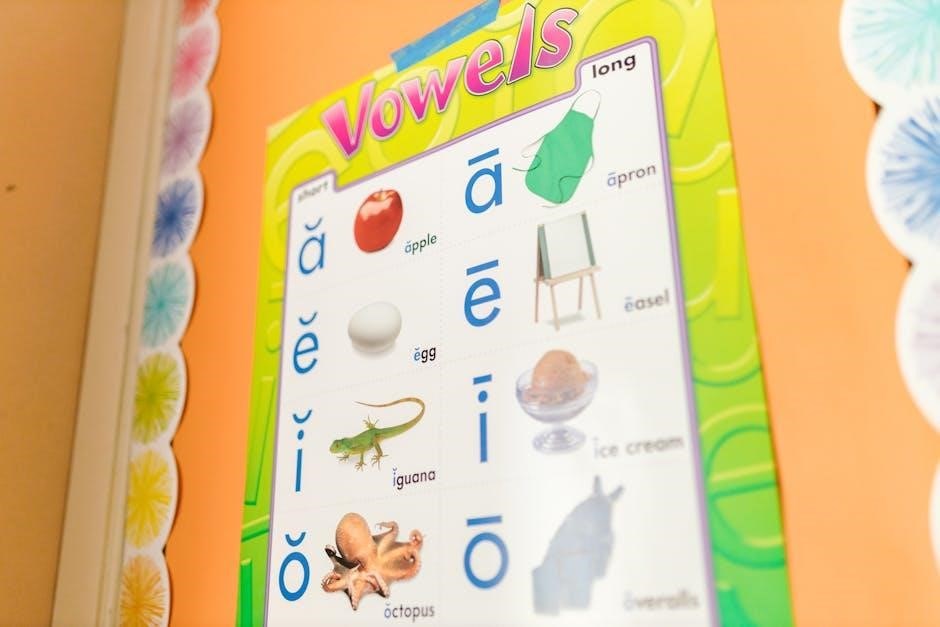
A notable characteristic of the West Virginia Phonics Lessons is their concentrated attention on the vowel teams “ER” and “IR”. While the resource doesn’t present a comprehensive scope and sequence covering all phonics elements, these specific vowel combinations receive significant emphasis.
Lessons dedicated to “ER” and “IR” aim to help students decode words containing these common vowel digraphs, improving reading fluency and comprehension. The materials likely provide practice with blending sounds and recognizing patterns associated with these vowel teams.

Educators should note that this focused approach means other vowel teams and phonetic concepts may not be as extensively covered within this particular resource, requiring supplementation with other materials.

Utilizing the Lessons Effectively
These lessons are best used as a targeted supplement, integrating with existing reading programs to address specific student needs and reinforce phonics skills.
Integrating with Existing Reading Programs
The West Virginia phonics lessons aren’t a complete curriculum; they function optimally when woven into a broader, established reading program. Consider these lessons as focused interventions addressing specific skill gaps, particularly concerning vowel teams like ‘ER’ and ‘IR’.
Teachers should identify areas where students struggle within their core reading instruction and then select relevant lessons to provide targeted support. For example, if a class demonstrates difficulty with decoding words containing ‘ER’, a corresponding lesson can be implemented.
This supplemental approach avoids redundancy and ensures that phonics instruction complements, rather than duplicates, existing efforts. Remember, the lessons lack a defined scope and sequence, so thoughtful integration is crucial for maximizing their impact on student learning.
Targeted Intervention and Remediation
These West Virginia phonics lessons excel as tools for focused intervention, particularly for students needing remediation in specific phonetic skills. The resource’s strength lies in its ability to address isolated areas of difficulty, like mastering vowel teams ‘ER’ and ‘IR’.
Teachers can use these lessons with small groups or individual students who demonstrate consistent errors in decoding or encoding words with targeted sounds. Prior assessment of phonemic awareness and letter-sound correspondence is vital, as the lessons assume these foundational skills are already established.
The student-driven nature of the lessons allows for personalized learning, where instruction is tailored to individual needs, rather than a rigid, pre-determined sequence. This flexibility makes them ideal for addressing diverse learning gaps effectively.
Supporting Diverse Learner Needs
The West Virginia phonics lessons offer adaptability for diverse learners, though require careful consideration of prerequisite skills. While not a comprehensive program, they can supplement instruction for students with varying learning styles and needs.
For English Language Learners (ELLs), these lessons can reinforce sound-symbol relationships, crucial for decoding. However, explicit instruction in phonemic awareness is essential beforehand. Students with dyslexia or other reading difficulties may benefit from the focused practice, but require multi-sensory approaches alongside these materials.
The lack of a defined scope and sequence necessitates teacher judgment in selecting appropriate lessons based on individual student assessments. Differentiation through modified activities and pacing is key to ensuring accessibility for all learners.

Additional Resources and Considerations
Explore further West Virginia reading initiatives to complement these phonics lessons. Staying current with best practices in phonics instruction is also highly recommended for educators.
Exploring Related West Virginia Reading Initiatives
Beyond these specific phonics lessons, the West Virginia Department of Education has launched various reading initiatives aimed at improving literacy outcomes across the state. Investigating these broader programs can provide a more comprehensive understanding of the state’s approach to reading instruction.
Teachers should research current WVDE literacy policies and professional development opportunities. These initiatives often offer supplementary resources, training, and support networks that align with the phonics lessons.
Consider exploring Reading First, the program that originally housed these lessons, to understand the foundational principles guiding their development. While the original webpage is no longer active, archived information may be available.
Furthermore, look into any current statewide literacy campaigns or grant programs focused on enhancing reading skills. Integrating these initiatives with the phonics lessons can create a cohesive and impactful literacy program for students.
Staying Updated on Phonics Instruction Best Practices
While the West Virginia phonics lessons are a valuable resource, the field of literacy instruction is constantly evolving. Educators should commit to ongoing professional development to remain current with research-based best practices in phonics.

Explore resources from organizations like the International Dyslexia Association (IDA) and the Reading League to deepen your understanding of effective phonics instruction. These organizations offer webinars, articles, and training programs.
Familiarize yourself with the Science of Reading, a growing body of research emphasizing the importance of systematic and explicit phonics instruction.
Regularly review and adapt your teaching strategies based on student needs and emerging research. Staying informed ensures you provide the most effective phonics instruction possible, complementing the WV lessons.