
Mitsubishi Thermostat Manual: A Comprehensive Guide
Navigating Mitsubishi’s diverse thermostat options requires understanding model-specific features and programming. This guide decodes serial numbers, explores compatibility, and aids in troubleshooting.
Understanding Mitsubishi Thermostat Systems
Mitsubishi’s heating and cooling systems, particularly their heat pumps, utilize sophisticated thermostats for precise climate control. These aren’t simply on/off switches; they’re integral to maximizing energy efficiency and comfort. Wired and wireless options cater to diverse installation needs, with models like the PAR-40MAAU offering basic functionality and the PAR-43MAAUB providing advanced control for P-Series units.
Understanding the interplay between the thermostat and the indoor unit is crucial. Communication protocols ensure accurate temperature readings and responsive adjustments. Features like remote sensor integration, found in the MHK2, allow for zone-specific temperature management. Proper programming, utilizing cool, heat, and dry modes, unlocks the full potential of these systems, optimizing performance and reducing energy consumption.

Identifying Your Mitsubishi Thermostat Model
Locating the model and serial numbers is key to accessing the correct manual and troubleshooting resources. These identifiers unlock specific feature details.
Locating the Model Number
The Mitsubishi thermostat model number is crucial for finding the correct documentation and ensuring compatibility with your heat pump system. Typically, this number is prominently displayed on a label affixed directly to the thermostat unit itself. Carefully inspect the front, sides, and even the back of the thermostat housing.
Look for a string of characters, often a combination of letters and numbers – for example, PAR-40MAAU or PAR-43MAAUB. This identifier distinguishes your specific thermostat model from others in the Mitsubishi lineup. Online resources, like the Official Mitsubishi Motors Parts Store, emphasize searching by part name or being less specific if initial searches yield no results. Knowing this number streamlines the process of finding relevant manuals and support information.
Decoding the Serial Number for Year of Manufacture
The serial number is the key to determining your Mitsubishi heat pump’s – and potentially the thermostat’s – year of manufacture. This number, also found on the unit’s label, follows a specific format that encodes production date information. While the exact decoding method varies, understanding the structure is vital.
HomeScale highlights the serial number as holding this crucial data. Though specifics aren’t universally published, analyzing the sequence can reveal the manufacturing year. This information is valuable for warranty claims, parts compatibility, and understanding the age of your system. Remember that the serial number provides a clue, and further research might be needed for precise dating.

Common Mitsubishi Thermostat Models
Mitsubishi offers diverse thermostats like the PAR-40MAAU, PAR-43MAAUB (P-Series), and MHK2, each with unique features and compatibility considerations for optimal control.
PAR-40MAAU: Wired Remote Control Features
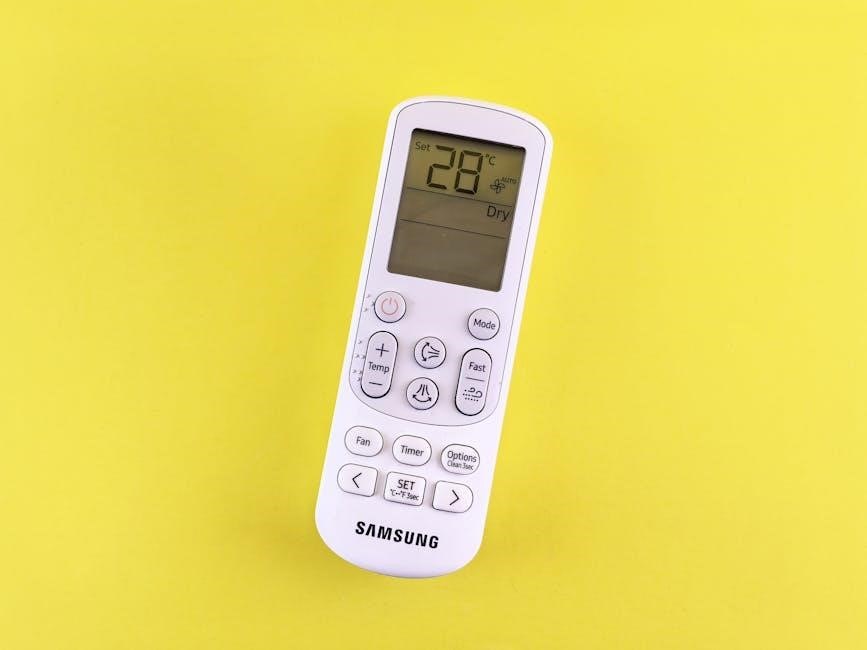
The Mitsubishi PAR-40MAAU is a widely used wired remote control, offering a straightforward interface for managing mini-split systems. This thermostat allows for basic on/off operation, mode selection (cool, heat, dry, and fan), and temperature adjustments. Users can easily set desired temperatures and control fan speeds directly from the unit.
Its wired connection ensures reliable communication with the indoor unit, eliminating potential wireless interference. While it doesn’t boast advanced features like remote sensor integration found in newer models, the PAR-40MAAU provides essential control functionality. It’s known for its simplicity and durability, making it a popular choice for many Mitsubishi systems. Installation typically involves connecting wires to the indoor unit’s control board, and it’s often a direct replacement for older PAR-40MA models.
PAR-43MAAUB: P-Series Installation Controller
Designed specifically for Mitsubishi P-Series installations, the PAR-43MAAUB wired remote control prioritizes ease of operation, convenience, and energy efficiency. This controller offers user functions including on/off control, mode selection (cooling, heating, dry operation, and fan-only), temperature setting, and adjustable fan speeds.
It also allows for control of airflow direction. The PAR-43MAAUB is ideal for installations where a simple, reliable, and user-friendly interface is desired. Its specifications are tailored to seamlessly integrate with P-Series indoor units, ensuring optimal performance and compatibility. Installation requires proper wiring to the indoor unit, and it’s crucial to consult the installation manual for specific instructions and safety precautions.
MHK2 Thermostat: Functionality and Compatibility
The MHK2 thermostat is a versatile option frequently used with Mitsubishi heat pump systems, particularly the M-Series. Users on platforms like Reddit have shared experiences with its functionality, often pairing it with remote sensors for enhanced temperature management across different zones. It offers standard controls for setting temperature, fan speed, and operating modes – cool, heat, and dry.
Compatibility extends to various M-Series indoor units, providing reliable control. However, confirming compatibility with specific models is always recommended. The MHK2’s simplicity and integration with remote sensors make it a popular choice for those seeking a balance between functionality and ease of use within a Mitsubishi system.

Mitsubishi Thermostat Programming & Operation
Mitsubishi thermostats offer intuitive control over your climate. Easily adjust settings for on/off operation, temperature, fan speed, and select cooling, heating, or dry modes.
Basic On/Off Operation
Initiating operation with your Mitsubishi thermostat is straightforward. Typically, a dedicated “On/Off” button, often visually represented by a power symbol, controls the system’s primary function. Pressing this button activates or deactivates the unit. Ensure the thermostat is in the desired mode – Cool, Heat, or Dry – before powering on for optimal performance.
Some models, like the PAR-40MAAU, feature a simple interface for direct control. Others, such as those paired with MHK2, may require navigating a menu system. After powering on, the thermostat will display the current room temperature and the set temperature. The system will then automatically work to achieve and maintain the setpoint, based on the selected mode. Remember to check the indoor unit for corresponding power indication.
Setting Temperature and Fan Speed
Adjusting temperature is usually achieved via up and down arrow buttons on the Mitsubishi thermostat. The display will show the desired setpoint, typically in Fahrenheit or Celsius, depending on your configuration. Fan speed control allows you to regulate airflow; options commonly include Auto, Low, Medium, and High. “Auto” adjusts fan speed based on cooling or heating demand.
Models like the PAR-43MAAUB offer precise control over these settings. Experiment with different fan speeds to find a balance between comfort and energy efficiency. Remember that lower fan speeds generally consume less energy but may result in less even temperature distribution. The remote sensor integration, when available, can further refine temperature control within specific zones.
Utilizing Cool, Heat, and Dry Modes
Mitsubishi thermostats offer versatile operation through Cool, Heat, and Dry modes. “Cool” mode lowers the room temperature, activating the cooling cycle. “Heat” mode raises the temperature, engaging the heating function. The “Dry” mode, often called dehumidification, reduces humidity levels without significantly altering the temperature – ideal for damp climates.
Switching between modes is typically done via a “Mode” button on the thermostat or remote control. The PAR-40MAAU and PAR-43MAAUB models clearly display the selected mode. Understanding these modes allows you to optimize comfort and energy usage based on your specific needs and environmental conditions. Proper mode selection ensures efficient operation of your Mitsubishi heat pump system.

Advanced Features & Settings
Explore remote sensor integration, group model settings (factory setting 001), and energy-saving functions for optimized performance and personalized comfort control.
Remote Sensor Integration
Mitsubishi thermostats, particularly models like the MHK2, offer compatibility with remote temperature sensors. These sensors allow for more precise temperature control by measuring the temperature in a specific location within a room, rather than relying solely on the thermostat’s internal sensor. This is especially useful in larger spaces or areas with uneven temperature distribution.
Installation typically involves connecting the remote sensor to the thermostat using a designated wiring connection. Once connected, the thermostat can be programmed to prioritize the remote sensor’s reading, ensuring consistent comfort. Users on HVAC-Talk forums frequently discuss the benefits of using remote sensors with PAR and MHK2 models, highlighting improved temperature accuracy and overall system efficiency. Proper sensor placement is crucial for optimal performance.
Group Model Setting (Factory Setting 001)
The “Group Model Setting” is a crucial, often overlooked, configuration within Mitsubishi thermostat systems. As noted in HVAC-Talk discussions, the factory setting is typically “001”. This setting dictates how the thermostat communicates and operates within a multi-indoor unit setup, ensuring coordinated control across the entire system.
Confirming the correct Group Model setting is vital during installation or troubleshooting. Referencing the indoor unit’s operation manual is essential to verify the appropriate number for your specific configuration; Incorrect settings can lead to communication errors or inconsistent temperature regulation between indoor units. Modifying this setting requires careful attention to detail and adherence to the manufacturer’s instructions.
Energy Saving Functions
Mitsubishi thermostats incorporate several features designed to optimize energy consumption and reduce operating costs. The PAR-43MAAUB, for instance, is specifically highlighted for its energy-saving capabilities alongside ease of operation and convenience. While specific functions vary by model, common features include programmable schedules allowing customized temperature settings based on occupancy patterns.
Furthermore, intelligent temperature control algorithms learn usage habits to proactively adjust settings. Some models support integration with remote sensors, enabling localized temperature management and preventing unnecessary heating or cooling of unoccupied spaces. Exploring these functions within your thermostat’s menu can significantly improve energy efficiency and lower utility bills.
Troubleshooting Common Issues
Addressing unresponsive thermostats, inaccurate readings, or communication errors with the indoor unit is crucial. Consult the manual for diagnostic steps and potential solutions.
Thermostat Not Responding
A non-responsive Mitsubishi thermostat can stem from several causes, demanding a systematic approach to diagnosis. First, verify the power supply – check the batteries if applicable, or the circuit breaker supplying the indoor unit. Ensure the thermostat is securely connected to the wiring harness; loose connections are a frequent culprit.
Next, examine the thermostat’s display for any error codes, referencing the unit’s manual for their specific meanings. If the display is blank, attempt a reset by briefly disconnecting the power. Confirm the thermostat’s compatibility with the connected indoor unit; mismatched systems won’t communicate. Finally, consider potential interference from other electronic devices. If issues persist, professional HVAC assistance may be required to identify more complex electrical or control board failures.
Incorrect Temperature Readings
Discrepancies between the thermostat’s displayed temperature and the actual room temperature necessitate investigation. Begin by ensuring the thermostat isn’t directly exposed to sunlight, drafts, or heat-generating appliances, as these can skew readings. Verify the thermostat’s location isn’t near exterior walls or poorly insulated areas.
If using a remote temperature sensor, confirm its proper placement and connectivity. Calibrate the thermostat, if the model allows, following the instructions in the manual. Check for dust accumulation within the thermostat housing, which can obstruct accurate sensing. Consider the possibility of a failing thermistor – the temperature-sensing component – requiring professional replacement. Consistent inaccuracies suggest a deeper issue needing expert attention.
Communication Errors with Indoor Unit
If your Mitsubishi thermostat displays communication errors, the system struggles to connect with the indoor unit. First, power cycle both the thermostat and the indoor unit by turning them off and on. Inspect the wiring connections between the two units, ensuring they are secure and free from corrosion.
Verify the correct wiring configuration according to your specific model’s manual; incorrect wiring is a common cause. Check for any obstructions or damage to the communication cable. If the issue persists, a faulty control board within either the thermostat or indoor unit may be the culprit, requiring professional diagnosis and repair. Consider potential interference from other electronic devices nearby.

Finding Mitsubishi Thermostat Manuals
Locating official manuals is crucial for setup and troubleshooting. Explore the Mitsubishi Motors Parts Store, online databases, and HVAC-Talk forums for assistance.
Official Mitsubishi Motors Parts Store Resources
The official Mitsubishi Motors Parts Store is a primary source for authentic thermostat manuals and related documentation. However, navigating the site requires precise part number knowledge, as searches by model or year can yield “no results found.” The store currently lists thermostat components for the Outlander PHEV (from 04/2013) and other models like the 2.4L hybrid, but availability is limited.
Effective searching involves using specific part names (e.g., “water pump”) rather than broad terms. Simplifying search terms – using “brake” instead of “ceramic brake” – can also improve results. Remember that the parts store focuses on component-level searches, so a direct “Mitsubishi Thermostat Manual” query might not be fruitful. Always double-check compatibility with your specific unit before downloading or referencing any manual found on the site.
Online Manual Databases
While the official Mitsubishi site can be challenging to navigate for manuals, several online databases offer potential solutions. These resources often compile manuals from various manufacturers, including Mitsubishi, providing a centralized location for searching. However, verifying the authenticity and accuracy of the manual is crucial before relying on its information.
Be prepared to search using specific model numbers (like PAR-40MAAU or PAR-43MAAUB) to narrow down results. User forums, such as HVAC-Talk, can also be valuable, as members frequently share links to manuals or offer assistance in locating them; Remember to exercise caution when downloading files from unfamiliar sources and always scan for viruses.
HVAC-Talk Forums for Manual Assistance
HVAC-Talk forums represent a vibrant community of HVAC professionals and enthusiasts, often proving invaluable for locating elusive Mitsubishi thermostat manuals. Users frequently share direct links to downloadable PDFs or offer guidance on where to find specific documentation.
The forum’s search function is your first step; utilize keywords like “Mitsubishi thermostat manual” alongside your specific model number. If a direct download isn’t available, consider posting a request in the relevant forum section, detailing your model and the information you need. Experienced members may have the manual readily available or know where to source it, offering a collaborative solution.
Compatibility with Mitsubishi Heat Pump Systems
Ensuring thermostat compatibility is crucial for optimal performance with M-Series, P-Series, and even Outlander PHEV systems; check model specifications carefully.
M-Series Heat Pump Compatibility
Mitsubishi’s M-Series heat pumps generally exhibit broad thermostat compatibility, but specific models benefit from optimized controllers. The PAR-40MAAU wired remote is a frequently used option, offering comprehensive control over cooling, heating, and fan functions. Users on HVAC-Talk forums frequently discuss pairing the MHK2 thermostat with remote sensors for enhanced zone control within M-Series systems.
However, verifying compatibility is paramount. Older M-Series units might require adapters for newer thermostat models. Direct communication between the thermostat and the indoor unit is essential for accurate temperature readings and efficient operation. When upgrading, consult the official Mitsubishi documentation or a qualified HVAC technician to ensure seamless integration and avoid potential performance issues. Proper wiring and configuration are key to unlocking the full potential of your M-Series system.
P-Series Heat Pump Compatibility
Mitsubishi’s P-Series heat pumps are ideally paired with the PAR-43MAAUB wired remote control, designed specifically for P-Series installations. This controller prioritizes ease of use, convenience, and energy savings, offering intuitive operation of cool, heat, and dry modes, alongside temperature and fan speed adjustments. Online resources from The AC Outlet highlight the PAR-43MAAUB’s suitability for P-Series systems.

While some users have successfully integrated other controllers, like the MHK2, with P-Series units (as discussed on Reddit’s r/heatpumps), the PAR-43MAAUB generally provides the most reliable and feature-rich experience. Always confirm compatibility before purchasing a replacement thermostat, referencing the indoor unit’s operation manual for specific guidance and avoiding potential communication errors.
Outlander PHEV Thermostat Components (Limited Availability)
Mitsubishi’s official parts store indicates limited thermostat component availability for the Outlander PHEV, specifically models from April 2013 onwards. Searching for “thermostat components” yields results, but broader searches like “water pump” or less specific terms like “brake” are recommended for better results. The store emphasizes using part names and avoiding overly specific details like year or model.
It’s crucial to note that Outlander PHEV thermostat parts are distinct from those used in standard Mitsubishi heat pump systems. Finding compatible replacements may require precise part numbers and potentially sourcing from specialized automotive parts suppliers. Due to limited stock, exploring alternative options or consulting a Mitsubishi dealer is often necessary.

Replacing a Mitsubishi Thermostat
Selecting the correct replacement and carefully considering wiring are vital. Professional installation is recommended, though DIY is possible with sufficient HVAC knowledge.
Choosing the Right Replacement
Selecting a compatible replacement Mitsubishi thermostat is crucial for optimal system performance. Begin by precisely identifying your existing model – PAR-40MAAU, PAR-43MAAUB, or MHK2 are common examples. Ensure the new thermostat is specifically designed for your Mitsubishi heat pump series (M-Series or P-Series).
Consider desired features; do you need remote sensor integration or advanced energy-saving functions? Verify compatibility with your indoor unit. The official Mitsubishi Motors Parts Store is an excellent resource for finding the correct part number. Avoid generic thermostats, as they may lack the necessary communication protocols for full functionality. Prioritize genuine Mitsubishi parts to maintain warranty validity and system efficiency. Double-check specifications before purchasing to prevent errors.
Wiring Considerations
Mitsubishi thermostat wiring differs from standard HVAC systems, demanding careful attention. Before disconnecting the old thermostat, meticulously document the existing wiring configuration – photograph it! Mitsubishi systems utilize proprietary communication protocols. Incorrect wiring can cause malfunctions or damage to the indoor and outdoor units.
Typically, wiring involves connections for power, communication (S-NET), and potentially remote sensor integration. Refer to both the old and new thermostat’s wiring diagrams. If unsure, consult a qualified HVAC technician. Ensure power is completely shut off at the breaker before working with any wiring. Use appropriately sized wire connectors and secure all connections properly to prevent loose wires and potential hazards.
Professional Installation vs. DIY
Replacing a Mitsubishi thermostat presents a choice: professional installation or a DIY approach. While some homeowners with HVAC experience may attempt a DIY installation, it’s generally recommended to hire a qualified technician. Mitsubishi systems employ unique wiring and communication protocols, increasing the risk of errors.
Professional installation ensures correct wiring, proper system configuration, and optimal performance. Technicians possess the necessary tools and expertise to diagnose potential issues and guarantee compatibility. A DIY attempt, if incorrect, could void warranties or even damage the heat pump system. Consider the complexity and your comfort level before deciding; safety and functionality are paramount.