
Oklahoma CDL Manual Overview
Oklahoma’s CDL Manual, updated to the 2025 Modernized Testing System, outlines eligibility, written exams, skills tests, and vehicle inspection procedures. It details Class A, B, C definitions, endorsements, and renewal requirements for commercial drivers. It also details safety rule

Eligibility, Application, and Written Tests
To obtain an Oklahoma CDL, applicants must be 18+ for intrastate, 21+ for interstate, hold a valid Oklahoma license, pass a medical exam, and submit a written knowledge test of 70 multiple‑choice questions. A 70% score is required, plus residency proof and fee. Applicants must pass vision
Age, Residency, and Medical Requirements
Applicants for an Oklahoma Commercial Driver’s License (CDL) must meet specific age, residency, and medical criteria to ensure safe operation of commercial vehicles. The minimum age is 18 for intrastate driving and 21 for interstate commerce. If the applicant is under 21, they must obtain a restricted license and comply with the “under‑21” restrictions, which include a maximum gross vehicle weight limit of 26,000 pounds and a prohibition on driving hazardous materials. To qualify, the applicant must be a legal resident of Oklahoma, demonstrated by a current Oklahoma driver’s license or a state ID issued within the last 90 days. Proof of residency may be provided through a utility bill, lease agreement, or bank statement showing the applicant’s name and Oklahoma address. In addition to age and residency, a valid medical certificate is mandatory. The certificate must be issued by a licensed physician, certified by the Department of Transportation, and completed within 90 days of the application. The medical exam evaluates vision, hearing, cardiovascular health, and overall fitness to operate a commercial vehicle. Applicants must pass the vision test with a minimum 20/40 acuity in each eye, and a hearing test that meets the Department’s standards. The physician must sign a “Medical Examiner’s Certificate” that confirms the applicant’s medical fitness. Failure to meet any of these criteria results in denial of the CDL application. The Department also requires applicants to update their medical certificate every two years, or sooner if a medical condition arises that could impair safe driving. All documentation must be submitted with the application fee, and the applicant must schedule an appointment at a local Department of Motor Vehicles office to complete the process. The Department’s online portal offers resources for locating the nearest office, scheduling appointments, and downloading required forms. By adhering to these age, residency, and medical requirements, applicants can successfully obtain an Oklahoma CDL and begin their commercial driving career.
In Oklahoma, the minimum age to obtain a commercial driver’s license (CDL) is 18 for intrastate operation and 21 for interstate commerce. Applicants under 21 must hold a restricted license, limiting gross vehicle weight to 26,000 pounds and prohibiting hazardous materials. To be eligible, the applicant must be a legal resident of Oklahoma, proven by a current Oklahoma driver’s license or state ID issued within the last 90 days. A valid Oklahoma driver’s license is required as proof of identity and residency. The medical requirements are strict: a certified physician must complete a Medical Examiner’s Certificate within 90 days of the application. The exam evaluates vision (minimum 20/40 in each eye), hearing, cardiovascular health, and overall fitness to operate a commercial vehicle. Applicants with medical conditions that could impair safe driving must disclose them; the Department may require additional testing or a waiver. The medical certificate must be renewed every two years, or sooner if a medical condition arises. All documentation must be submitted with the application fee, and the applicant must schedule an appointment at a local Department of Motor Vehicles office to complete the process. The Department also offers a mobile testing option and a dedicated helpline for test scheduling, ensuring accessibility for all applicants. Additionally, applicants can request a waiver for the medical exam if they have a documented medical condition that does not affect driving safety, subject to review by the Department. The Department also offers a 24‑hour helpline for urgent certificate inquiries. Safe driving.
Skills Tests and Vehicle Inspection
Oklahoma’s CDL skills test covers basic controls, forward and reverse maneuvers, and a vehicle inspection. Applicants must show safe braking, parking, and mirror use. Inspection checks tires, lights, brakes, and load securement. for safe
Basic Controls and Maneuvers
The Oklahoma Commercial Driver’s License (CDL) skills test requires mastery of basic vehicle controls and essential maneuvers. Testers evaluate the applicant’s ability to operate the steering wheel, throttle, brakes, clutch (for manual transmissions), and gear shift with precision and safety. Proper use of the horn, turn signals, and windshield wipers is also assessed.
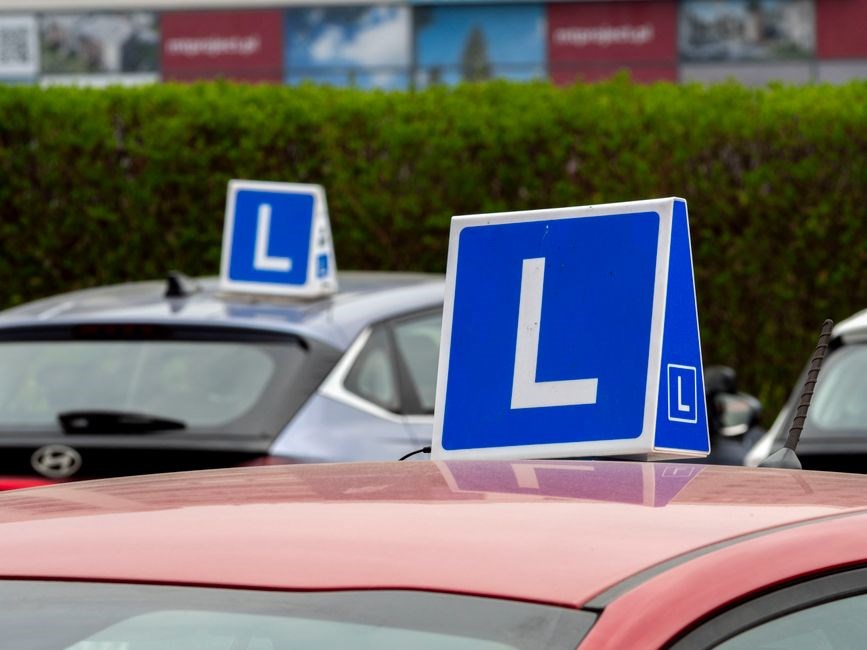
Applicants must demonstrate smooth acceleration and deceleration, maintaining lane position while turning, and executing a 360‑degree turn in a confined space. The test includes a forward “L” maneuver, a backward “L” maneuver, and a parallel parking maneuver. Each maneuver must be performed within the designated area, using the correct hand positions and mirror checks.
During the forward “L” maneuver, the driver initiates a left turn, then reverses into a straight line, and finally turns right to complete the shape. The backward “L” maneuver is the reverse of the forward “L,” requiring the driver to move backward, turn right, and then move forward to finish; Parallel parking demands precise steering, use of the parking brake, and correct distance from the curb.
Testers also observe the driver’s use of the parking brake, the ability to stop within a specified distance, and the correct application of the handbrake during a stop‑and‑go scenario. Proper use of the seat belt, seat adjustment, and driver’s visibility are mandatory checks. The overall goal is to ensure that the driver can safely control the vehicle in everyday commercial driving situations.
Vehicle Inspection Procedures
Oklahoma CDL testers require a pre‑drive inspection. The driver walks the vehicle, checking tires (tread, sidewall, inflation), brakes (handbrake, parking, foot, rear), steering (free, smooth, no play), lights (head, tail, brake, turn, hazard), mirrors (adjusted, clear), horn, wipers, and fluid levels (oil, coolant, brake, transmission). The driver must locate each part, explain its purpose, and describe how to address a defect. They must also verify the air‑brake system: gauge pressure, master cylinder, brake chambers, and check for leaks in lines and pads. The examiner will confirm the horn, signals, and brake lights work, and that the seat and mirrors are set for optimal visibility. The inspection must be finished before the vehicle starts, and the driver should be able to explain how to secure the vehicle with the handbrake and set the parking brake. This procedure ensures the driver can identify hazards and maintain safety before operating on public roads. The examiner will also ask the driver to demonstrate how to check the brake fluid level, inspect the brake pads for wear, and verify the condition of the brake lines for leaks. The driver must confirm that the seat belt is functional, the seat is properly adjusted, and the mirrors provide adequate rear and side visibility. Finally, the driver should be able to explain how to secure the vehicle with the handbrake and set the parking brake before starting the engine. !!!?

CDL Classifications and Endorsements
Oklahoma’s CDL system defines Class A for tractor‑trailer combos, Class B for single vehicles over 26,000 lb, and Class C for smaller trucks with passengers or hazardous loads. Endorsements—N, P, H, X, M, S, T, Z, Hazmat, Tanker, Passenger, School Bus—add specific skills and safety training and compliance.!!!
Class A, B, and C Vehicles
Class A vehicles are tractor‑trailer combos with a GCWR of 26,001 lb+ and a GVWR of 10,001 lb+. They haul multiple trailers or a single trailer over 10,000 lb, up to 80,000 lb GCWR. Drivers must pass written and skills tests covering combination maneuvers and advanced braking.
Class B vehicles are single, non‑combination trucks with a GVWR of 10,001 lb+ but GCWR < 26,000 lb. They include delivery trucks and straight‑line rigs. A Class B license allows operation of any vehicle in this weight range and a trailer up to 10,000 lb, provided the combined weight stays within limits. The skills test focuses on basic handling and reversing. Class C vehicles have a GVWR < 10,001 lb or a GVWR of 10,001 lb+ that is not Class A or B. These are smaller commercial vehicles such as vans, small trucks, and passenger cars. A Class C license permits operation of any vehicle in this category, with a skills test emphasizing safe driving, inspection, and maneuvering. Each class has specific medical, insurance, and safety requirements. Oklahoma’s Department of Public Safety provides guidelines to ensure drivers are properly trained and qualified for the vehicles they intend to operate. Understanding the distinctions between Class A, B, and C is essential for drivers seeking the right license. Each class requires specific training, medical certification, and safety protocols. Oklahoma’s licensing authority offers resources and testing to help applicants prepare for the written and skills exams, ensuring all commercial drivers meet rigorous standards set by the Department of Public Safety. These guidelines help maintain safety drivers all!
Common & Special Endorsements (N, P, H, X, M, S, T, Z, Hazmat, Tanker, Passenger, School Bus)
In Oklahoma, endorsements extend a CDL’s authority. The N endorsement allows a driver to operate a vehicle with a non‑standard loading device, such as a double or triple trailer. The P endorsement is required for transporting hazardous materials; it requires a separate written test and a background check. The H endorsement permits operation of a vehicle equipped with a hazardous cargo device, such as a tank or a container that holds hazardous materials. The X endorsement is for operating a vehicle that has a special device or attachment, such as a tow hook or a special trailer. The M endorsement allows a driver to haul a combination of a tractor and a trailer that is heavier than 10,000 lb but less than 26,000 lb. The S endorsement is for school bus operation; it requires a separate written test and a background check. The T endorsement permits a driver to operate a vehicle that has a special device or attachment, such as a tow hook or a special trailer. The Z endorsement is for operating a vehicle that has a special device or attachment, such as a tow hook or a special trailer. Hazmat endorsement is required for transporting hazardous materials and requires a background check and a separate written test. The Tanker endorsement allows a driver to operate a tanker vehicle now The Passenger endorsement permits a driver to transport passengers in a vehicle that is not a school bus. The School Bus endorsement allows a driver to operate a school bus, which is a vehicle that carries students.

License Maintenance, Renewal, and Safety Programs
Oklahoma requires a 2‑year renewal, with a fee and a medical certificate. Drivers must complete courses, pass drug tests, avoid accumulating points. Renewal notices arrive 90 days early, and penalties apply for submission.
Renewal Periods, Fees, and Medical Updates

In Oklahoma, a commercial driver’s license (CDL) is valid for a two‑year period. Renewal notices are mailed 90 days before expiration, and the license can be renewed online, by mail, or in person at a Department of Public Safety (DPS) office. The standard renewal fee is $30, but a $20 fee applies to drivers who have earned a “good standing” status by maintaining a clean driving record for the past five years. If a driver has accumulated more than 12 points, the fee increases to $50. Medical updates are mandatory every two years; drivers must submit a current medical examiner’s certificate (DOT Form 3910) that confirms they meet the health standards for operating commercial vehicles. Failure to provide a valid medical certificate within 30 days of renewal results in license suspension. Additionally, drivers who have a history of substance abuse must complete a state‑approved rehabilitation program and submit a drug test certificate before renewal. The DPS offers a “Renewal Assistance” program for seniors and disabled drivers, allowing them to renew at a reduced fee of $15. All renewals must be processed before the expiration date to avoid penalties or license revocation. For more details, visit the Oklahoma DPS website or contact your local office.
Drivers ensure their vehicle registration and insurance are current, as lapses can result in license suspension. The Oklahoma DPS offers app for renewal status checks today. Keep a medical certificate in your vehicle!
Mandatory Safety Courses, Drug Testing, and Points System
Oklahoma’s CDL rules require new holders to finish the State‑Approved Driver Safety Course (SADSC) within 30 days of issuance. Renewal holders with 12 or more points in the last 24 months must retake the SADSC before reinstatement. All drivers of hazardous‑material or passenger vehicles must undergo a 90‑minute drug‑testing module; a positive result leads to a 180‑day suspension and a mandatory rehabilitation program before license is restored. The state’s points system assigns 1 point for minor violations, 3 for serious infractions, and 5 for major offenses such as reckless driving or DUI. Accumulating 12 points triggers a 30‑day suspension; 18 points trigger a 90‑day suspension and a safety refresher course. The Department of Public Safety tracks points electronically, and drivers can view their status online. Maintaining a clean record can qualify drivers for reduced insurance premiums and eligibility for employer‑sponsored training. For updates, consult the Oklahoma CDL Manual or the DPS website. Stay compliant and safe on the road. Follow rules daily.
The DPS also offers a voluntary safety audit program for commercial fleets, which evaluates driver training, vehicle maintenance, and compliance with federal regulations. Participation can result in a safety rating that may lower insurance costs and improve operational efficiency. Drivers are encouraged to schedule audits ann to maintain safety standards!!.

Violations and Disciplinary Actions
Oklahoma’s Commercial Driver License (CDL) enforcement imposes a tiered penalty structure. The Department of Public Safety (DPS) assigns 1 point for minor infractions, 3 for moderate, and 5 for major violations. Accumulating 12 points in 24 months triggers a 30‑day suspension; 18 points lead to a 90‑day suspension and mandatory safety refresher training. Repeat offenders face escalating penalties: 12 points may result in a 60‑day suspension, 18 points a 180‑day suspension with a required medical evaluation. A single violation of the Hazardous Materials Regulations can lead to immediate revocation pending investigation. The DPS enforces administrative revocation for non‑compliance with drug‑testing protocols or failure to complete the State‑Approved Driver Safety Course. Drivers may appeal decisions through the Oklahoma Administrative Hearing Board within 30 days of the notice; failure to appeal or meet reinstatement conditions results in permanent revocation. Employers must report violations involving company vehicles to the DPS within 30 days, or face fines up to $5,000 and potential fleet suspension. The DPS publishes a public record of violations, allowing employers and drivers to monitor compliance and take corrective action before penalties accrue. Drivers who fail to comply with the reinstatement process may also be subject to a 30‑day administrative suspension pending a review. The state encourages ongoing education, offering refresher courses that can reduce points and improve safety records. Compliance with these regulations not only protects drivers but also enhances the reputation of the transportation industry!!!? .
Training Resources and Study Aids
Oklahoma’s Department of Public Safety supplies a wide range of study tools that help candidates prepare for the written and skills portions of the CDL exam. The official Oklahoma CDL Study Guide is available as a downloadable PDF and as an interactive web module that covers every topic in the 2025 Modernized Testing System, from basic vehicle operations to advanced endorsements. For those who prefer self‑paced learning, the Oklahoma CDL Practice Test offers 200 multiple‑choice questions with instant feedback and detailed explanations, mirroring the exact format and difficulty of the state test. Mobile applications such as “CDL Test Prep” and “Oklahoma Driver Test” provide flashcards, video tutorials, and progress tracking, allowing students to study on the go and monitor their improvement in time. Community colleges and vocational schools across the state partner with the DPS to run in‑person review courses that include mock skills tests, vehicle‑inspection drills, and safety‑first workshops. The “CDL Road Test Simulator” app gives drivers a virtual environment to practice maneuvers, parking, and emergency handling, helping them build confidence before the on‑road test. For endorsements that require specialized knowledge, the Oklahoma Commercial Driver Handbook offers in‑depth explanations of regulations, safety rules, and operational procedures. The Hazardous Materials Training Module is for H endorsements and includes case studies. Finally, the DPS’s online portal hosts a database of past test questions, a points‑tracking system, and a calendar of safety courses, ensuring that every driver can tailor their study plan to meet the state’s rigorous standards.